The 10 Features That Matter Most in a Great Auditorium
A good auditorium does not announce itself through one dramatic feature. You notice it in smaller ways, the voice from the stage reaches the last row, the seats remain comfortable, and people can enter or leave without confusion.
That is what separates an ordinary hall from a thoughtfully planned performance venue. Modern auditoriums host far more than plays and concerts. They may be used for screenings, conferences, award ceremonies and community programmes. Hence the auditorium design has to balance performance needs with comfort, reliability and safety.
Venues such as Bal Gandharva Rang Mandir show how a cultural venue can support different events without losing its identity. These ten features matter most.
- Acoustics That Work in Every Seat
Sound is often the first thing people notice when it goes wrong.
A speaker may sound clear in the front row but distant at the back. Music may feel too loud near the stage and weak under a balcony. Poorly controlled echoes can make dialogue difficult to follow.
Good acoustic design considers the shape of the room, wall finishes, ceiling design, seating materials and speaker placement. The aim is not to make the auditorium louder, but to make speech, music and effects sound balanced. A theatre performance needs clear dialogue, while a concert needs warmth and depth.
- A Clear View of the Stage
A comfortable seat loses its value if the person sitting in it cannot see the performance properly.
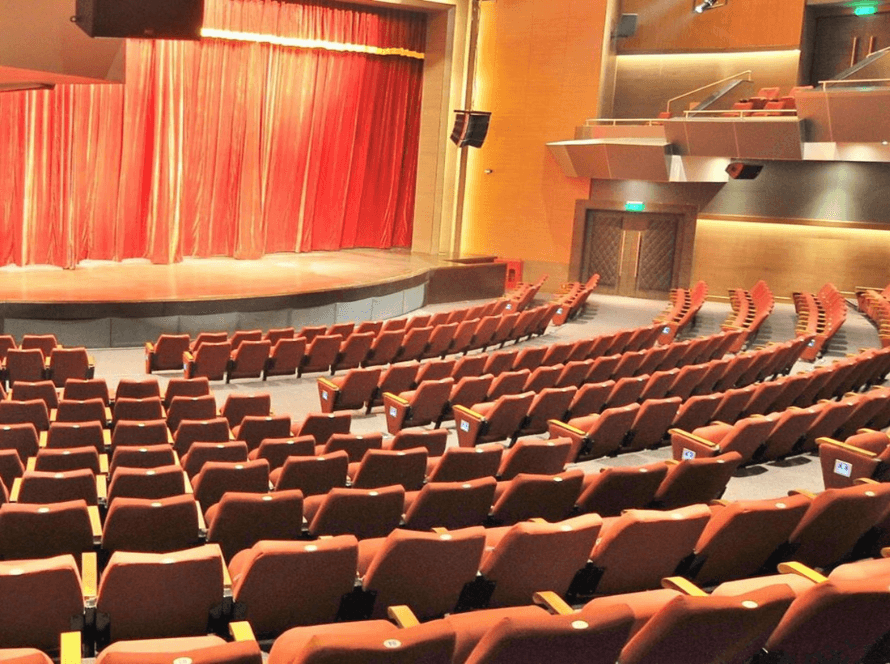
A clear view of the stage depends on several small design choices, such as the stage height, floor slope, spacing between rows. Tiered seating helps by raising each row, so people can see the performance without constantly looking over the person in front.
This is especially important in theatre and dance, where small movements and facial expressions carry meaning. A well-planned auditorium keeps the audience involved instead of forcing people to shift around for a better angle.
- Seating People Can Actually Enjoy
Auditorium seating has to do more than fit as many people as possible into a room.
People may remain seated for two or three hours, so back support, cushioning and legroom matter. Row spacing should let guests reach their seats without everyone having to squeeze past.
The best layouts balance capacity with comfort. They also make navigation easier with clear seat numbers, visible row markers and accessible sections. Comfortable seating keeps attention on the stage.
- A Stage That Can Adapt
Not every event uses a stage in the same way.
A play may need sets, curtains and wing space. A music programme may require room for instruments and several performers. A business event may need a podium, screen and branded backdrop.
A flexible stage gives organisers more options. Useful elements include rigging points, movable curtains, backstage access, projection surfaces and practical loading routes.
This adaptability matters for venues such as Bal Gandharva Theatre, where the programme may move from a cultural performance to a formal event without the space feeling unsuitable for either.
- Lighting That Supports the Event
Stage lighting is not only about brightness. It helps create mood, direct attention and shape the way an audience sees a performance.
A theatre production may need precise spotlights and quick scene changes. A concert might rely on colour and movement, while a conference usually needs even lighting.
Modern control systems make these changes easier to programme. LED fixtures are also popular because they use less energy, create less heat and offer a broad range of effects.
House lighting matters too. Stairs, aisles and exits should remain visible without pulling attention away from the stage.
- Reliable Audiovisual Technology
Most events now depend on more than a microphone and a pair of speakers. Projectors, display screens, digital sound consoles, recording equipment and presentation systems have become standard requirements. Some organisers also need live-streaming or hybrid-event support.
These systems work best when they are part of the original auditorium design. Concealed wiring, accessible connection points and a properly positioned control area make the venue easier to operate.
For anyone considering Bal Gandharva Auditorium for a performance or presentation, technical capability is likely to be as important as seating capacity or location.
- Accessibility Built into the Space
Accessibility should never feel like an add-on.
Step-free entrances, ramps, lifts and wheelchair seating should be part of the main plan. Accessible restrooms, handrails and clear signs also make the venue easier to use.
Some guests may need assistive listening systems, captioning or better visual guidance. A well-designed auditorium does not simply allow people with different requirements to enter. It allows them to enjoy the event with dignity, comfort and a clear view of the stage.
- Effective Climate Control
A full auditorium can become uncomfortable quickly, especially during a long event. Ventilation and air-conditioning systems need to maintain a pleasant temperature.
Good systems distribute air evenly and adjust to the number of people in the hall. People should notice the performance, not the machinery.
- Smooth Audience Movement
The experience of an auditorium begins before the curtain rises.
Visitors need to find the entrance, ticket counter, seating section, restroom and exit without confusion. Spacious lobbies, clear signs and sensible pathways reduce congestion, particularly before and after an event. Inside the hall, aisles should remain clear, steps should be visible and emergency exits should be easy to identify.
This is especially relevant when choosing an auditorium in Mumbai, where many guests may arrive close to the start time. A venue that handles entry efficiently creates a calmer beginning for everyone.
- Useful Front-of-House and Backstage Facilities
The main hall may receive most of the attention, but the surrounding spaces often determine how smoothly an event runs.
Audiences appreciate clean restrooms, waiting areas, refreshment facilities and clear information points. Organisers may also need a foyer for registrations or guest interaction. Behind the stage, performers need dressing rooms, green rooms, storage and easy access to the performance area. Technical teams need enough space to prepare equipment without interrupting audience movement.
These practical details are worth considering when comparing options for the best auditorium in Mumbai. At Bal Gandharva Rang Mandir Bandra, as with any serious performance venue, supporting spaces influence the event just as much as the stage itself.
Conclusion
A modern auditorium succeeds when everything works together.
Strong acoustics are important, but so are clear views, comfortable seats, dependable technology and safe movement. A flexible stage also needs suitable lighting, backstage support and an audience-friendly layout.
A well-designed auditorium should help the audience forget about the building for a while. When people can hear clearly, see comfortably and enjoy the event without distraction, the space has done its job.