12 Things to Consider While Choosing Your Event Venue
Overwhelmed by the venue options while planning your event? It is natural to experience stress when there are too many venue options to choose from, but how do you select the right venue? This comprehensive guide will help you tick off 12 factors before finalizing your perfect event venue.Why Selecting a Venue Matters?
The most critical decision in event planning is choosing the right venue. The visit to the venue influences everything on your checklist: the space, staff, technical staff, etc., and you can imagine the overall guest experience. Finalizing an event venue helps you set the foundation of your event’s budget, structure and experience.The process of searching for the perfect venue is daunting with so many different choices and hidden challenges. Be it a corporate conference, a product launch, an exhibition, or a private gala, this guide will help you break down 12 key factors you should consider before finalizing your event venue.
If you’re planning to choose an event venue in Mumbai, some basic factors to check are local connectivity, weather and accessibility; this plays a major role in your decision-making process for the ease of your guests.
1. What are the Services and Amenities provided?
Reviewing what services and amenities are included or available in the basic rental fee charged by the venue is a must.What is the Audio-Visual Capacity?
You should check whether built-in screens, microphones, and sound consoles are available or if you would need to arrange for an external sound system.
Is there a dedicated staff for setup and cleanup?
To eliminate the need to hire external labor or volunteers, you must check if there is enough staff who can handle the setup and post-event teardown.
Are basic furniture and amenities available?
Check the seating arrangement including, the chairs, tables, and basic decor. The in-house furniture will save shipping and rental expenses.
2. What is the Location & How is the Accessibility?
The planner’s checklist should have a primary consideration of the guests’ travel and convenience. A thorough investigation, or rather evaluation, of the venue’s location is a must to ensure the presence of every guest invited.What is the travel distance?
For guests living nearby and who are local, one should choose a venue that’s easily accessible via highway or has proximity to public transportation.
Is there seamless airport proximity?
For guests who are travelling to the venue from outside Mumbai, picking a venue near the airport reduces travel fatigue and hefty transportation costs.
Planning an event in Mumbai?
Booking an event venue in Mumbai requires thorough planning that helps guests navigate local traffic patterns and monsoon conditions to prevent guest delays. The venue’s location also helps navigate how easily external suppliers can deliver heavy equipment in case of unavailability.
3. What is the Capacity and are there any F&B Restrictions?
For a comfortable experience, the capacity of the event venue should be sufficient enough to accommodate all the invited guests.Does the capacity of rooms match the guests invited?
While booking a venue, you should ensure that the room capacity available at the venue will comfortably accommodate guests without violating the regulations. If planned poorly, the overcrowded spaces may feel uncomfortable, leading to a poor guest experience.
Are there any restrictions on the Food and Beverage counts?
In case the venue has set a minimum requirement or spend over the F&B count per pax, you need to ask about the past event details that happened at the venue. In case your budget exceeds the requirement of the venue, leverage that spending power and negotiate for complimentary Wi-Fi or upgraded tech support.
4. Is there Wi-Fi? How is the Network Infrastructure?
Guests in 2026 expect modern infrastructure and free Wi-Fi accessibility.Availability of reliable high-speed internet connectivity:
Ensure that the guests have access to Wi-Fi coverage across the auditorium, lobbies, cafeteria, conference halls, etc.
Dedicated Networks for presentations:
Make sure that for technical presentations or reviews, live streaming or digital check-in apps, a secure and private network password is created rather than the public guest Wi-Fi.
5. Are there parking facilities available for guests?
The fastest way to frustrate your guests is parking difficulties.Does the venue offer parking for the guests?
Verify if the venue has its own parking lot or offers valet service for the guests, especially for high-profile gatherings.
If the venue doesn’t offer it, what alternatives are available?
In case parking is limited to staff or fewer guests, check for nearby public parking facilities in advance which can help guests plan and arrive accordingly with their private vehicles.
6. Layout and Roadmap for Guests
In order to plan a seamless guest experience, you must obtain an architectural floor plan layout of the venue and map out various activities of your event.Flow of people and the traffic:
Ensure that the lobbies and hallways prevent bottlenecks and that high-traffic areas like the entrance, registration desks, and main auditorium doors are managed well by the staff, so that overcrowding is prevented.
Plan different activity zones:
Make sure that guests are accommodated in all the planned spaces for the ultimate experience; these spaces include stages, dining or snacks areas, discussion rooms and booths if available.
7. What’s the Interior Like and How is the Ambience?
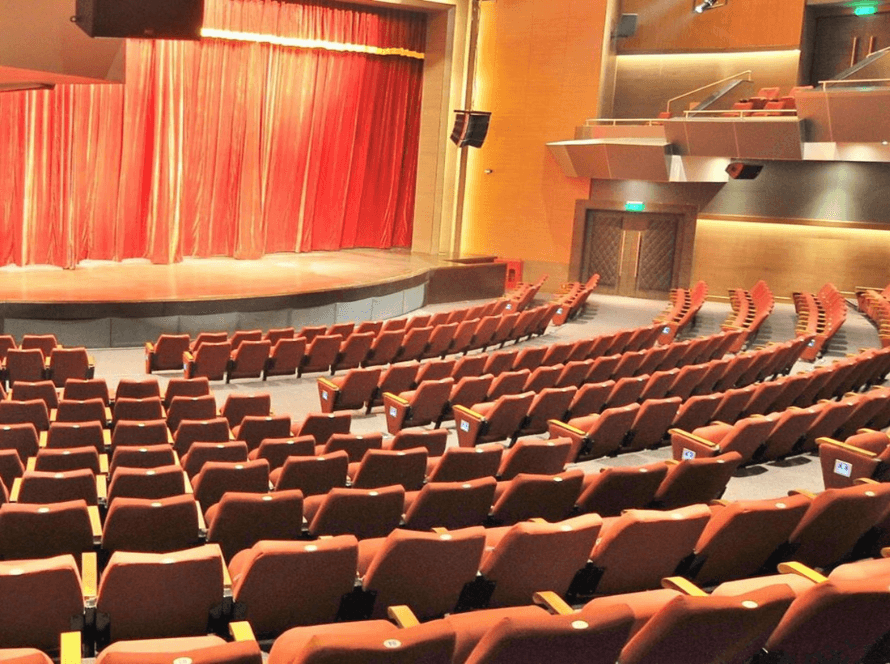
The existing decor of an auditorium significantly impacts the mood of your guests and your decor budget.Architectural layout and style of the venue:
Just like a ballroom is perfect for galas and industrial lofts fit product launches, matching the theme of your event with the venue’s natural aesthetic will save money on outside decor contracts.
Is there accessibility for the differently abled?
Make sure your venue provides ramps for wheelchairs, wide doorways and accessible restrooms so every guest is comfortable in their own way inside the premises.
8. Does the cost sheet come with insurance?
Commercial venues do not execute locking dates for events without proof of general liability insurance; it is mandatory for the safety of the guests.Liability Coverage – an important decision:
Before booking a venue for an event, you should confirm the insurance limits as stated by the owner of the property. Once that is confirmed, one should add the event venue as an additional insured party.
Plan early to avoid delayed processes:
Once you have confirmed the booking or decided to lock the event at the same venue, request insurance language, mandatory addresses and coverage amounts from the venue manager.
9. Give detailed attention to Sound Engineering & Acoustics
The placement and quality of the sound system directly impacts the engagement and sound clarity for the guests.Test of the Acoustics:
Evaluating the venue’s acoustics before hosting an event is crucial. Severe echo and speech distortion can be easily caused due to poor room designs, low ceilings, bare concrete walls, and large uncurtained glass windows.
Noise Cancellation and Isolation:
The noise that travels from large windows creates disruption and damages the venue’s acoustics. The ambient noise from adjacent walls bleeds through thin partition walls. Choose a carpeted floor, padded seating and an acoustic wall-paneled venue to soundproof your event.
10. Flexibility of Contracts and Cancellation
Sudden circumstances can cause disruption of your events and plans. Having a flexible contract ensures securing the right venue for your ease and comfort.Making sure you’re choosing the right venue:
Finding a perfect venue means cooperating with the management offering a fair, transparent policy if an unexpected change or issue occurs. Understanding is the key.
Rescheduling shouldn’t be a hassle:
Negotiating and transferring the deposits to the new date of your event shouldn’t be a problem if understanding is present between you and the venue manager/management, and you or they are not at a loss.
11. Does the Venue offer Event Date Flexibility?
Maintaining and deciding 2-3 dates for your event gives you bargaining power during negotiations.Off-peak days help you save more:
Most venues offer a discounted rate for weekdays, open calendar dates or off-peak seasonal months.
Prepare multiple date options:
Negotiating with more than 1 or 2 dates for the event helps you negotiate better to secure preferred pricing for the availability of your dates.
12. Closely Identify Obligations by the Internal Service Providers
Some venues limit the services and suggest exclusive vendor partnerships.Check if all the requirements match in the venue:
Go ahead and confirm if most offerings are included in the package you’re offered. Catering, lighting, security, technical support, etc., should ideally be included in the in-house package. If any of the services are unavailable, ask for vendor support in the provided cost sheet or package.